Table of Contents
ToggleReading and literacy development techniques shape how people learn throughout their lives. Strong reading skills open doors to education, career growth, and personal enrichment. Yet many learners struggle without the right strategies in place.
This guide breaks down proven methods for building reading ability at any age. From phonemic awareness to vocabulary expansion, these techniques work for children and adults alike. The goal is simple: create confident, capable readers who enjoy books and written content.
Key Takeaways
- Reading and literacy development techniques build on three foundations: print awareness, alphabet knowledge, and oral language skills.
- Phonemic awareness (hearing sounds) and phonics instruction (connecting sounds to letters) work together to unlock reading ability.
- Vocabulary knowledge directly impacts comprehension—learners need to understand about 95% of words in a passage to grasp its meaning.
- Fluency develops through repeated practice, including paired reading, reader’s theater, and timed reading exercises.
- Creating a literacy-rich environment with accessible books, print displays, and visible adult reading models accelerates literacy growth.
- It’s never too late to develop reading skills—the brain remains capable of literacy development throughout life.
Understanding the Foundations of Literacy
Literacy development starts with understanding how reading actually works. The brain must connect visual symbols (letters) to sounds, then link those sounds to meaning. This process requires multiple cognitive skills working together.
The foundations of reading include:
- Print awareness: Recognizing that text carries meaning and follows left-to-right, top-to-bottom patterns
- Alphabet knowledge: Identifying letters and understanding they represent sounds
- Oral language skills: Having a vocabulary base to draw from when decoding words
Reading and literacy development techniques build on these core elements. Children typically develop print awareness through exposure to books, signs, and labels. Adults learning to read in a new language follow similar patterns.
Research shows that early literacy experiences predict later reading success. Kids who hear 1,000+ words per day develop stronger language foundations than those with limited exposure. But it’s never too late, the brain remains capable of developing literacy skills throughout life.
Effective instruction addresses all foundation areas simultaneously. A learner might practice letter recognition while also building vocabulary through conversation. This integrated approach speeds up reading and literacy development.
Phonemic Awareness and Phonics Instruction
Phonemic awareness is the ability to hear and manipulate individual sounds in words. It’s separate from phonics, though the two work together. Phonemic awareness happens in the ear: phonics connects sounds to written letters.
Consider the word “cat.” Phonemic awareness lets a learner identify three distinct sounds: /k/, /a/, /t/. Phonics instruction then teaches that these sounds match the letters C-A-T. Both skills are essential for reading and literacy development.
Effective phonemic awareness activities include:
- Rhyming games: Identifying words that end with the same sound
- Sound blending: Combining /s/ + /u/ + /n/ to say “sun”
- Sound segmenting: Breaking “fish” into /f/ + /i/ + /sh/
- Sound manipulation: Changing “bat” to “cat” by swapping the first sound
Phonics instruction works best when it’s systematic and explicit. Teachers should introduce letter-sound relationships in a logical sequence, starting with high-frequency patterns. Short vowel sounds typically come before long vowels. Simple consonant-vowel-consonant words precede blends and digraphs.
Decodable texts support phonics learning. These books use words that match the patterns students have learned. A child who knows short vowels and basic consonants can read: “The cat sat on a mat.” This success builds confidence and reinforces reading and literacy development techniques in action.
Building Vocabulary and Comprehension Skills
Vocabulary knowledge directly impacts reading comprehension. Readers who know more words understand more text. It’s that straightforward.
Research indicates that children need to understand roughly 95% of words in a passage to comprehend it well. This means vocabulary instruction must be ongoing and intentional.
Effective vocabulary building strategies include:
- Direct instruction: Teaching new words with definitions, examples, and context
- Wide reading: Exposing learners to varied texts across subjects
- Word analysis: Teaching prefixes, suffixes, and root words
- Contextual learning: Using surrounding text to figure out unknown words
Comprehension skills require explicit teaching too. Good readers don’t just decode words, they actively construct meaning. Reading and literacy development techniques for comprehension include:
- Making predictions: Guessing what will happen next based on clues
- Questioning: Asking “why” and “how” while reading
- Summarizing: Identifying main ideas and key details
- Making connections: Linking text to personal experience, other books, or world knowledge
- Visualizing: Creating mental images of scenes and concepts
Think-alouds help learners see these strategies in action. An instructor reads a passage aloud while verbalizing their thought process: “I’m confused here, so I’ll reread this paragraph. Oh, now I understand, the author is using a metaphor.”
Comprehension improves when readers engage actively with text rather than passively moving through words.
Strategies for Developing Fluent Readers
Fluency bridges decoding and comprehension. Fluent readers recognize words automatically, read with appropriate speed, and use expression that reflects meaning. Without fluency, readers spend so much mental energy on word recognition that comprehension suffers.
Reading and literacy development techniques for fluency focus on practice and modeling.
Repeated reading is one of the most effective approaches. Learners read the same passage multiple times until they achieve smooth, accurate performance. Studies show 3-4 readings typically produce significant improvement.
Paired reading works well for both children and adult learners. A more skilled reader and a developing reader read aloud together. The stronger reader provides support, and the learner gradually takes over more of the reading.
Reader’s theater motivates practice through performance. Students rehearse scripts and perform for an audience. This purpose-driven repetition builds fluency while keeping learners engaged.
Other fluency-building practices include:
- Timed reading: Tracking words per minute to measure progress
- Echo reading: Instructor reads a sentence, learner repeats it
- Choral reading: Group reads aloud in unison
- Audiobook support: Listening while following along with text
Fluency develops through volume of practice. There’s no shortcut. Readers need exposure to thousands of words to build the automatic recognition that enables smooth reading. This is why independent reading time matters so much for reading and literacy development.
Creating a Literacy-Rich Environment
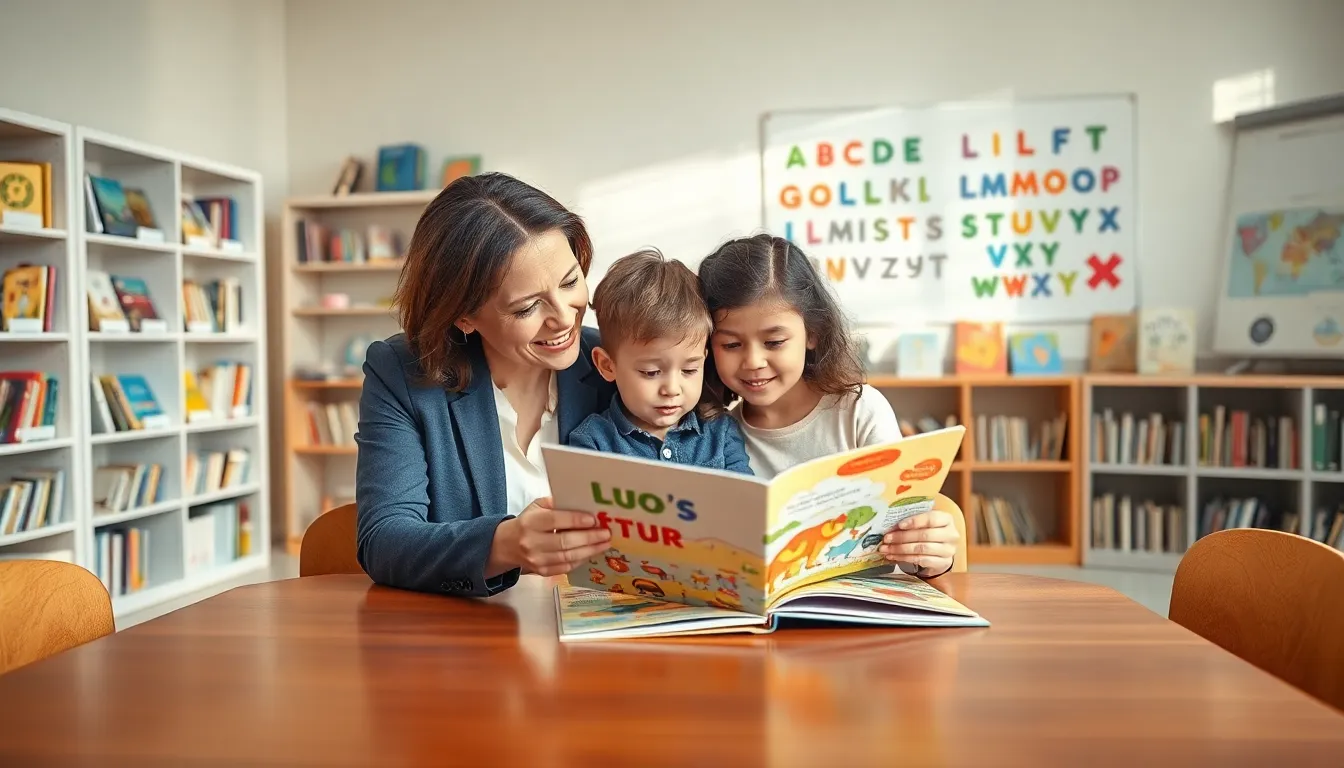
Environment shapes behavior. Spaces filled with books, print, and reading opportunities encourage literacy growth.
A literacy-rich environment includes:
- Accessible books: Varied texts at appropriate levels within easy reach
- Print displays: Labels, signs, word walls, and student writing samples
- Comfortable reading spaces: Quiet corners with good lighting and seating
- Writing materials: Paper, pencils, markers, and journals readily available
Homes and classrooms both benefit from these elements. Research consistently links book access to reading achievement. Children with books at home read more and score higher on literacy assessments.
Modeling matters too. When adults read, children notice. Family reading time, where everyone reads their own material silently, normalizes reading as a valued activity.
Digital resources expand options for reading and literacy development. E-books, educational apps, and audiobooks provide additional exposure to text. But, print books remain valuable, especially for younger readers learning to handle physical texts.
Some practical tips for building a literacy-rich space:
- Rotate book displays to spark fresh interest
- Include diverse genres: fiction, nonfiction, poetry, graphic novels
- Create a “book of the week” feature
- Let learners see adults reading for pleasure
- Celebrate reading milestones and achievements
The goal is making reading visible, accessible, and normal. When literacy surrounds learners, reading and literacy development happen more naturally.