Table of Contents
ToggleReading and literacy development examples show how children and adults build essential language skills over time. These skills form the foundation for academic success, career growth, and personal enrichment. From infants hearing their first words to teenagers analyzing complex texts, literacy develops through distinct stages. Each stage requires specific activities and support systems.
This article explores practical literacy development examples across age groups. It covers the stages of literacy growth, early reading activities, strategies for emergent readers, and approaches for older learners. Parents, educators, and caregivers will find actionable ideas to support readers at every level.
Key Takeaways
- Reading and literacy development examples span five key stages—from pre-emergent (birth to age 3) through fluent reading (ages 9 and up)—each requiring tailored activities.
- Early literacy activities like read-alouds, letter recognition games, and phonological awareness exercises build essential pre-reading skills in young children.
- Emergent readers benefit from systematic phonics instruction, shared reading, sight word practice, and writing connections to crack the reading code.
- Older learners need content-area reading strategies, critical analysis skills, and digital literacy instruction to handle complex texts across subjects.
- Creating print-rich environments and encouraging independent reading at every age strengthens vocabulary, fluency, and comprehension over time.
- Parents, educators, and caregivers can use these reading and literacy development examples to provide targeted support for readers at any level.
Understanding the Stages of Literacy Development
Literacy development follows a predictable sequence. Researchers have identified several stages that readers progress through from birth to adulthood. Understanding these stages helps adults provide age-appropriate reading and literacy development examples.
Pre-Emergent Stage (Birth to Age 3)
Infants and toddlers absorb language through listening. They recognize familiar voices, respond to songs, and begin associating sounds with meaning. Reading and literacy development examples at this stage include board book exploration, nursery rhymes, and pointing at pictures while naming objects.
Emergent Stage (Ages 3 to 5)
Children start recognizing that print carries meaning. They learn to hold books correctly, turn pages, and identify some letters. Literacy development examples here involve alphabet songs, environmental print recognition (like stop signs), and pretend reading.
Early Reading Stage (Ages 5 to 7)
Young readers begin decoding words using phonics. They read simple sentences and start recognizing sight words. Reading and literacy development examples include phonics games, decodable books, and word family activities.
Transitional Stage (Ages 7 to 9)
Readers become more fluent and shift focus from decoding to comprehension. They read longer texts with fewer pictures. Literacy development examples at this level feature chapter books, reading journals, and vocabulary expansion activities.
Fluent Stage (Ages 9 and Up)
Readers handle complex texts across genres. They analyze, synthesize, and evaluate information. Reading and literacy development examples now include book discussions, research projects, and independent reading programs.
Practical Examples of Early Literacy Activities
Early literacy activities build the skills children need before formal reading instruction begins. These reading and literacy development examples work well at home and in educational settings.
Read-Alouds
Reading aloud exposes children to vocabulary, sentence structure, and story patterns. Adults should read expressively, pause to discuss pictures, and ask simple questions. Daily read-alouds create positive associations with books.
Letter Recognition Games
Children benefit from hands-on letter learning. Magnetic letters on the refrigerator, alphabet puzzles, and letter-shaped cookie cutters make learning playful. Singing the alphabet song while pointing to letters reinforces letter names and sequence.
Phonological Awareness Activities
Phonological awareness, the ability to hear and manipulate sounds, predicts reading success. Literacy development examples include:
- Clapping syllables in names and familiar words
- Playing rhyming games (“What rhymes with cat?”)
- Identifying beginning sounds in words
- Blending sounds to form words (“What word is /c/-/a/-/t/?”)
Print-Rich Environments
Surrounding children with print builds literacy awareness. Labels on household items, accessible bookshelves, and visible writing materials invite exploration. Children learn that print carries meaning when they see adults reading and writing.
Storytelling and Oral Language
Oral language forms the base for reading comprehension. Family storytelling, describing daily activities, and discussing feelings expand vocabulary. Children who hear rich language develop stronger reading skills later.
Strategies for Supporting Emergent Readers
Emergent readers need consistent support as they crack the code of reading. These reading and literacy development examples help children move from pre-reading to early reading.
Systematic Phonics Instruction
Phonics teaches the relationship between letters and sounds. Effective phonics instruction follows a logical sequence, starting with simple consonant-vowel-consonant words and progressing to more complex patterns. Practice should include both isolated skill work and application in real reading.
Shared Reading
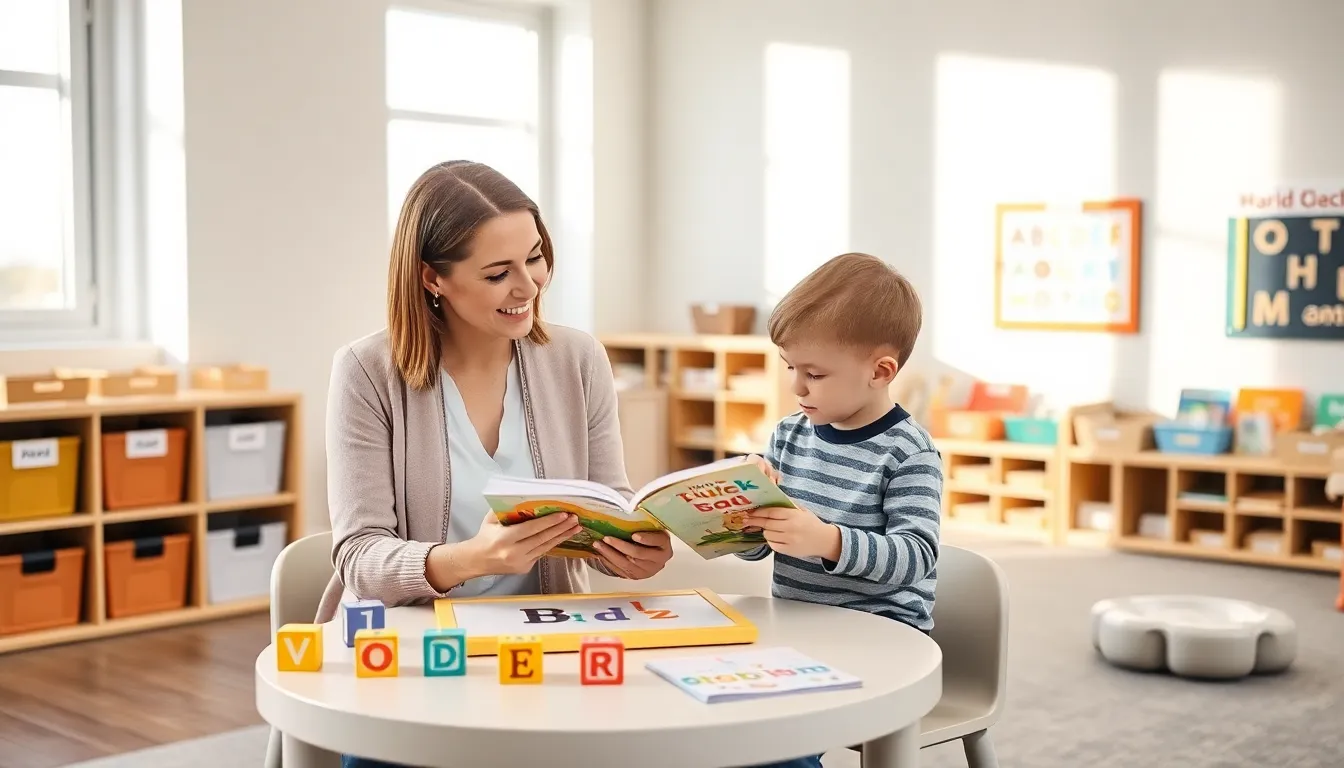
Shared reading involves adults and children reading together. The adult tracks text with a finger while reading, modeling fluency and pointing out print features. Predictable books with repetitive phrases let children join in and feel successful.
Guided Reading Groups
Small group instruction allows teachers to target specific skills. Children read texts matched to their level while the teacher provides support. This approach offers reading and literacy development examples through immediate feedback and strategy instruction.
Sight Word Practice
High-frequency words appear constantly in text. Many don’t follow regular phonics patterns. Flashcards, word walls, and games help children memorize these words for automatic recognition. Common sight words include “the,” “said,” “was,” and “they.”
Writing Connections
Writing reinforces reading skills. When children write, they apply phonics knowledge in reverse. Invented spelling is valuable, it shows children’s understanding of sound-letter relationships. Encourage writing through journals, lists, and simple stories.
Examples of Literacy Development for Older Learners
Literacy development continues beyond elementary school. Adolescents and adults need different reading and literacy development examples to grow as readers.
Content-Area Reading Strategies
Older students encounter specialized texts in science, history, and mathematics. Each subject requires different reading approaches. Literacy development examples include:
- Teaching text structure (compare/contrast, cause/effect, problem/solution)
- Using graphic organizers to map information
- Pre-teaching vocabulary specific to the subject
- Modeling think-alouds to demonstrate comprehension strategies
Critical Reading and Analysis
Mature readers evaluate texts for bias, credibility, and purpose. They identify author’s craft and rhetorical techniques. Discussion circles, debate activities, and analytical essays build these skills. Students learn to question sources and form evidence-based opinions.
Independent Reading Programs
Free voluntary reading improves fluency, vocabulary, and comprehension. Schools and families should provide access to diverse, engaging texts. Book clubs, reading challenges, and library visits motivate independent reading. Choice matters, readers who select their own books stay engaged longer.
Digital Literacy
Modern literacy includes digital texts. Reading and literacy development examples now cover website evaluation, multimedia comprehension, and online research skills. Students need instruction in distinguishing reliable sources from misinformation.
Adult Literacy Programs
Many adults struggle with reading. Effective adult literacy programs offer practical, real-world reading tasks. Examples include reading job applications, news articles, and health information. Instruction respects adult learners’ life experience while building foundational skills.